Schwitters Ursonate experiments
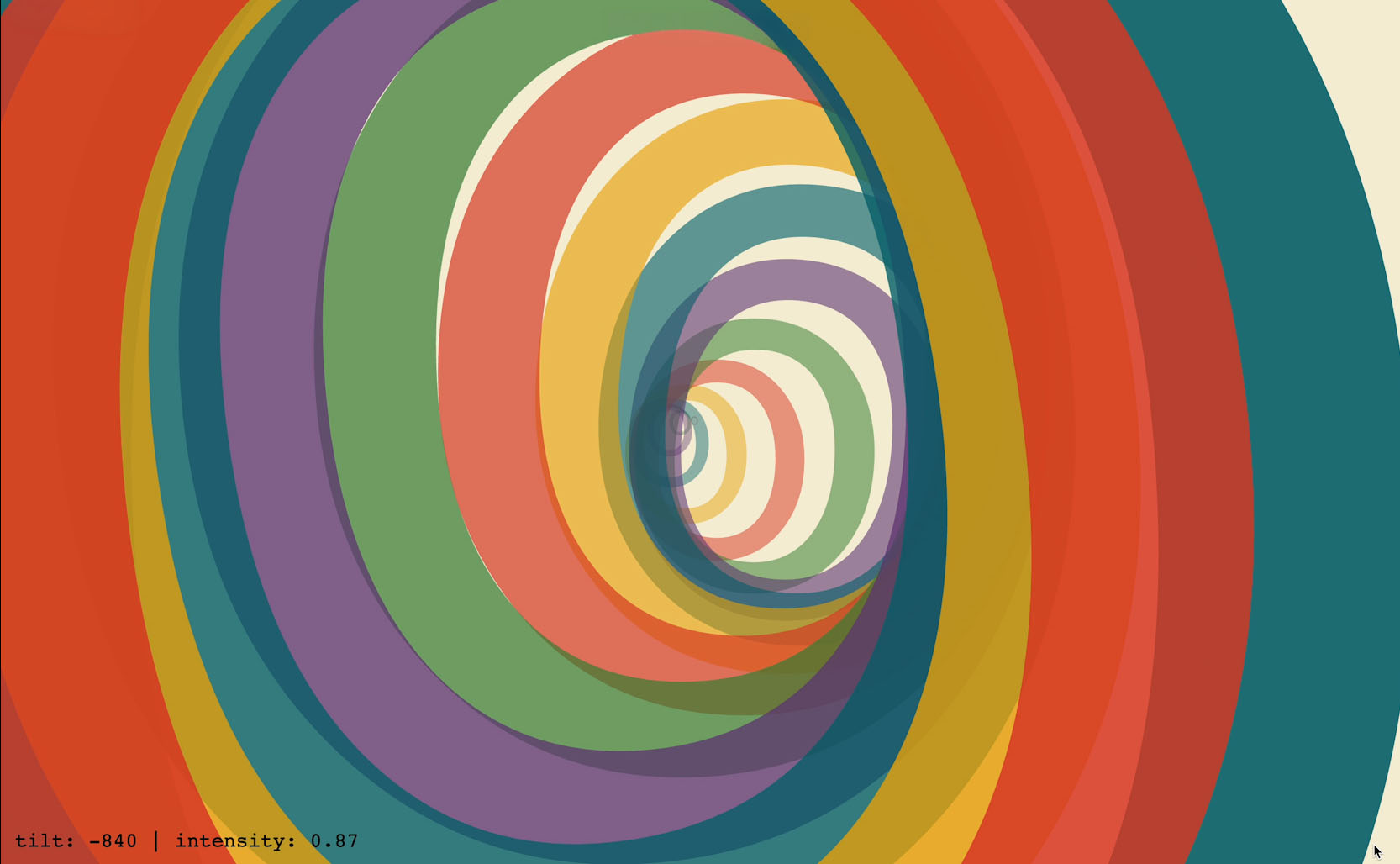
I've been working on Kurt Schwitters' Ursonate as part of a performance set using interactive creative technology. For a long while, I'd been learning p5js, a creative coding language. It was a way to touch base with playful poetry I loved during my time in Germany, partly as a wellbeing project.
While working in Bonn, I went to a poetry gig by the extraordinary Ernst Jandl, held in a huge theatre in Cologne (not sure which one). Jandl was an Austrian concrete and performance poet with the deepest, raspiest voice imaginable, whose work continued the spoken word lineage of Schwitters and Dadaism. I knew ottos mops and a few other poems, but nothing prepared me for a vast audience rapt, loud and joyous at an evening of avantgarde literature.
Later at a party, I met the American Fluxus and intermedia artist Jack Ox, who had also been to the Jandl gig, and mentioned she'd recently discovered a long-lost Schwitters audio recording at the WDR studios. What?!! This was immense news, as until 1992, no recording of the Ursonate had been found. The published 1932 text in the magazine merz 24, with its unusual typography and meticulous layout and instructions, could give only tantalising clues about how the original was spoken.
Interestingly, Jack Ox was working on large-scale paintings which were visualisations of Bruckner symphonies, based on chord colours and musical progressions. She was a pioneer in data visualisation in art, though it wouldn't be called that at the time.
So, the Schwitters recording (it seems by Ernst, Kurt's son) was now the authoritative version. However, I knew I'd never be able to perform it, as I couldn't do a sustained rhotic 'r'. Rr rr rr rr rr rrrrrum was impossible. I could just manage a double-tap rhotic, despite being a Scots language speaker (brraw brricht was the limit).
This year, I cracked the long rhotic rrrrrr. That's another story. But meanwhile, I began at the beginning, watching videos by Pamela Fox and learning for essentially the same reasons - as a meditation and medication. That, too, is another story. Schwitters' Ursonate as Mantra.
But on to coding. The Ursonate, despite its weird appearance, turns out to be highly patterned and repetitive. It's based on musical structures, and you'll find movements including largo and scherzo, call and refrain, question and answer, silence, performance notes (painfully), backwards alphabet and other sound games. Learning is tough, but not as impossible as it looks.
So I started work on animating the typography with interaction. It was slow work, with hundreds of interations and experiments. In the end, I used 'scenes' with attached animation styles, which made it easier once phrases started to reappear in the sequence. I also incorporated moments for audience interaction, including a game of escalating pong, and (Ernst?) Schwitters' voice. Kurt Schwitters began working on his poem in the 1920s and kept developing it, so the 1932 version is probably just a snapshot. I get the feeling my animation will keep evolving, too, as I develop more skills and different angles. Hearing about Jandl, Sprechgedichte and the jazz influence from the performance of Florian Kaplick, as well as contemporary accounts of Schwitters himself, I've so far tuned in to the playfulness and musicality of this strange piece. It's been like learning a new language, and has become a familiar tune. I guess that's a question for Dadaism - what happens when Verfremdung becomes familiarity? But for most poetry settings, that's a way off. Importing the Ursonate into a typical gig will still scare the horses.
Currently I'm using a BBC micro:bit with switches and tilt data, as a kind of DIY lo-fi mimu glove. These are used to trigger scenes and increase the intensity of float effects. At some point, I'd like to migrate it to something more expressive, and am trying Max/MSP.
Early in this journey, I heard the English jazz musician George Melly's story of scaring off attackers in London by shouting the Ursonate at them. It's certainly a piece that becomes part of you. It's there when you need it. Music, mantra, meditation, and a bit of welcome madness.
Schwitters' Ursonate, merz 24, 1932